
Selling a House with Foundation Issues in Ellington, CT? We Buy Houses Fast!
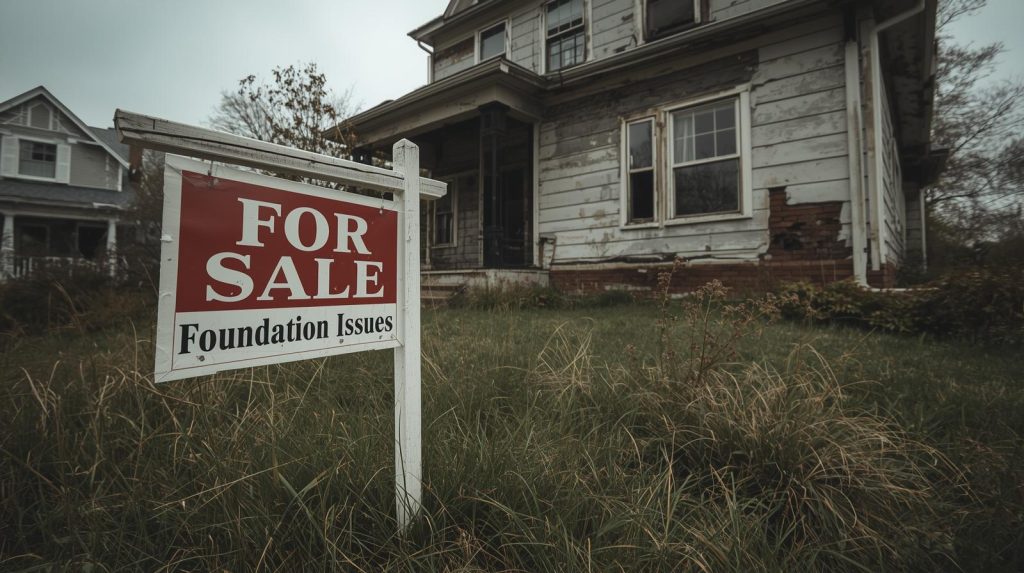
Selling a house with foundation issues can feel daunting. The foundation is the base on which everything else rests — walls, floors, roof, plumbing — so when the foundation is compromised, it raises serious concerns for most buyers and lenders. Structural problems often trigger fear of safety hazards, costly repairs, and long-term instability.
But despite those challenges, selling a house with foundation problems is possible — especially if you take the right approach. For homeowners in Ellington, CT (or anywhere), working with a cash buyer who purchases homes “as-is” offers a practical path forward: a faster sale, zero repair stress, and a straightforward closing.
In this article, we’ll walk you through everything you need to know: identifying foundation problems, deciding whether to repair or sell as-is, understanding costs and disclosure obligations, and ultimately — how to sell quickly even with foundation issues.
Understanding Foundation Issues and Their Impact on Home Sales
What Are Foundation Issues?
Foundation problems can manifest in a variety of ways — some subtle, others hard to ignore. Common signs that a house may have underlying foundation issues include:
- Cracks in walls (interior or exterior), floors, or ceilings — sometimes stair‑step cracks in brick/mortar walls.
- Doors or windows that stick, don’t open/close properly, or shift alignment.
- Uneven, sloping, or sagging floors; bouncy or squeaky floors.
- Walls, ceilings, or fireplaces pulling away from the house structure, or visible separation between the foundation and house framing.
- Gaps between garage door and pavement, or between house and trim; exterior walls bowing or bulging; porch/pillars leaning; chimneys separating.
- Water damage, persistent moisture in basement or crawl spaces, leaks, dampness or pooling around foundation (often exacerbating structural problems).
Causes of Foundation Damage can include:
- Soil movement or shifting (due to moisture fluctuations, expansive soils, inadequate soil compaction, or landscaping/tree roots).
- Water damage — poor drainage, flooding, water pooling, plumbing leaks, or ground water intrusion can weaken foundation over time.
- Poor original construction — improper foundation laying, substandard materials, insufficient support, or design flaws.
- Aging, settlement over time, or natural wear — especially in older homes where foundation aging has taken its toll.
Why Foundation Problems Make Selling Hard
Foundation issues significantly impact a home’s marketability, value, and finance eligibility. Here’s why:
- Buyer fear & risk perception: Many buyers imagine worst‑case scenarios: escalating repair costs, future structural or water problems, or even safety hazards. This deters interest.
- Financing challenges: Lenders may refuse mortgages for houses with major structural defects or require major repairs before approving — shrinking buyer pool to mostly cash or investor buyers.
- Reduced market value: Because of repair risk and limited buyer pool, properties with foundation problems sell at lower prices and often take longer to move.
- Inspection & appraisal hurdles: Many inspections or appraisals fail or draw red flags when structural defects exist — causing renegotiations or canceled sales.
In short: foundation issues make the home harder to sell — but not impossible. With the right strategy, the sale can still happen.
Should You Repair the Foundation Before Selling?
One of the first decisions you’ll face: should you invest money and time to fix the foundation before selling — or sell “as-is”? There’s no one-size-fits-all answer. It depends on your finances, timeline, local market, and your goals. Here’s how to think about it.
What Does Repairing Entail — And What Does It Cost?
Foundation repair costs vary widely depending on the severity of damage. For minor issues (e.g. small cracks), costs may be modest. For major structural problems (e.g. sinking, shifting, slab issues, bowing walls), costs escalate significantly.
Here’s a general breakdown:
| Type of Repair / Issue | Typical Cost Range (USD) |
|---|---|
| Minor crack repairs / sealing hairline cracks | ~ $250 – $800 |
| Minor waterproofing / minor foundation leaks | $2,000 – $6,000 |
| Foundation leveling / moderate structural repair | $4,000 – $12,000 |
| Piering, underpinning, major structural stabilizing / slab replacement / wall reinforcement | $8,000 – $30,000+ depending on severity, size, and soil conditions |
The national average cost for foundation repair (as of 2025) tends to hover around $5,100 — but that’s for “average” problems; severe issues can greatly exceed this.
For more detailed cost estimates on foundation repair, visit Angi – Foundation Repair Cost.
Other Considerations
- Labor and materials vary by region, size of house, and foundation type (slab, crawl space, full basement).
- Sometimes foundation problems have hidden root causes (soil movement, drainage, water pooling) — meaning even after repair, further work may be needed to prevent recurrence.
- Repairing may delay your sale — not just because of labor time, but because of obtaining permits, inspections, and extra evaluation.
Pros & Cons of Repairing vs Selling As‑Is
Here’s a comparative view to help you decide:
| Approach | Pros | Cons |
|---|---|---|
| Repair before selling | – More buyers (traditional buyers + investors) – Higher sale price potential – Easier appraisal and financing – Faster sale when marketed as “move‑in ready” | – Upfront cost (often significant) – Time delay (weeks to months) – No guarantee of full ROI – Risk of further issues if underlying causes not addressed |
| Sell As‑Is | – No repair cost, no delay – Faster sale possible – Good for cash buyers or investors willing to take on rehab | – Lower sale price – Smaller pool of buyers – Buyers may discount heavily due to perceived risk – Must fully disclose issues (legal/ethical considerations) |
Many homeowners — especially those looking for a fast sale, under tight timelines, or lacking funds for major repairs — opt to sell as-is.
Repairing your foundation can certainly help improve the home’s value, but it also comes with significant costs and time delays. However, if you choose to sell the house “as-is,” you can avoid the hassle of repairs and sell it in its current condition. This might be the best option if you need to sell quickly. To learn more about how to sell a house ‘as-is,’ check out this helpful guide from Zillow on How to Sell a House As-Is When It Needs Repairs.
How to Sell a House with Foundation Issues Fast in Ellington, CT
If you decide to sell rather than repair — or simply want options — below is a practical step‑by‑step guide to selling a house with foundation issues quickly and efficiently.
Step 1: Get a Professional Inspection / Assessment
Before listing or contacting buyers, it’s smart to get a professional foundation inspection (ideally by a structural engineer or experienced home inspector). This helps you understand the true scope and severity of the foundation problem.
A proper inspection can distinguish between minor, cosmetic cracks (which may not affect structural integrity) and serious structural problems (e.g. sinking, shifting, unstable soil, bowing walls, etc.). Many cracks are cosmetic or due to settling — not necessarily structural failures.
Having a professional report also helps in:
- Setting a realistic price
- Providing transparency to potential buyers
- Avoiding legal or disclosure disputes
Step 2: Be Transparent & Disclose Issues
Transparency is critical. If you know of foundation issues (or suspect them), you need to disclose them — even if selling as-is. Failing to do so can result in legal problems, buyer walkaways, or canceled sales.
Tip: Include the inspection report (or basic summary) in your listing or when submitting to interested buyers. This builds trust and avoids misunderstandings later.
Step 3: Price Realistically Based on Condition
Because foundation issues deter many buyers and affect financing options, a home with structural problems must be priced below market value (compared with properly maintained, foundation‑sound homes). The amount of discount depends on:
- The severity of foundation issues (minor vs major)
- Estimated repair costs (if buyer were to attempt to remedy)
- Market demand in your area and comparable sales (without foundation issues)
Some sellers may also offer repair credits (allowing buyer to handle repairs) instead of discounting — though repair credits are more common when working with traditional buyers.
Step 4: Target the Right Buyers — Cash Buyers, Investors, Flippers
Because traditional buyers — especially those requiring mortgage financing — are often turned off by foundation issues, the best bet is to target cash buyers, investors, or house flippers; these buyers are more likely to accept homes “as-is” and have the capital to fund repairs.
Marketing your home as a “fixer‑upper”, “investment opportunity,” or “as-is sale” can attract such buyers. It helps if you highlight positives the home still has (location, lot size, neighbourhood, other features) to balance the drawbacks.
Step 5: Prepare for a Quick Sale — Sell As-Is to a Cash Buyer
If speed is your priority, selling as-is to a cash buyer can streamline the process. Benefits include: no need for repairs, no financing delays, fewer contingencies, and a faster closing timeline.
Many cash‑buyer operations or investors specialize in distressed properties — they know what they’re buying and are comfortable budgeting for repairs. This makes them ideal for houses with foundation issues.
How the Cash Home Buying Process Typically Works (for Homes with Foundation Issues)
If you choose to sell “as-is” to a cash buyer, here’s a typical process you can expect:
- Submit Basic Property Details
- Provide information such as address, age of house, size (sq ft), lot details, and highlight any known foundation issues.
- Ideally, attach the inspection report or photos showing cracks, uneven floors, water damage, etc.
- Receive an Initial Cash Offer
- Based on your inputs and the buyer’s underwriting (which accounts for repair cost, expected resale value, time to renovate), the buyer gives a preliminary cash offer.
- This offer is usually lower than full market value (accounting for repair risk).
- Inspection / Walk-through by Buyer (Optional)
- Some cash buyers may do a quick walk-through to verify conditions — but often they waive full lender-style inspections because they buy for cash.
- The walk-through may adjust the offer slightly if additional issues are uncovered.
- Finalize Agreement & Disclosure Documentation
- Since you are selling a property with known defects, full disclosure is usually required. The buyer signs off that they accept the house “as-is.”
- Legal paperwork may reference foundation issues explicitly.
- Closing — Fast, Simple, Cash Payment
- Without mortgages or lender red tape, closing often completes in days to a few weeks (depending on title/conveyancing, local regulations, and readiness).
- You avoid real estate commissions, major repair costs, and the uncertainty of buyer financing.
This streamlined process is why many homeowners with problem properties (foundation issues, water damage, fire damage, etc.) choose cash buyers or investor‑type buyers rather than trying traditional listing.
Comparison: Traditional Buyer vs Cash Buyer (for Homes with Foundation Issues)
| Criteria | Traditional Buyer | Cash Buyer / Investor |
|---|---|---|
| Repair Costs | Buyer may request you fix issues, or renegotiate | You sell as-is — buyer handles repairs |
| Time to Close | Often 30–60+ days (mortgage + inspection delays) | Often 7–14 days (cash transaction, no mortgage) |
| Financing Required | Yes (mortgage, appraisal) | No — cash transaction only |
| Inspection/Appraisal | Almost always required — may fail or cause renegotiation | Often waived or minimal |
| Closing Costs / Commissions | Agent commissions, lender fees, possibly repairs requested | Minimal or no fees, no commissions (depends agreement) |
| Sale Price / Offer | Potentially higher — if house passes inspection | Lower — to account for risk and rehab costs |
| Buyer Pool / Demand | Limited — many lenders & buyers avoid problem homes | Niche — investors or buyers comfortable with rehabs |
| Certainty & Speed | Less certain — risk of buyer walking if issues surface | Higher — quick and predictable for seller |
Frequently Asked Questions (FAQs)
1. Can I Sell a House with Major Foundation Problems?
Yes — many homeowners successfully sell houses with foundation issues. While such problems make traditional sale harder, there are still buyers interested — especially investors and cash buyers who specialize in distressed properties.
That said, full disclosure is essential. You must be honest about known issues; hiding them can jeopardize the sale or lead to legal trouble down the line.
2. Will I Get a Fair Price if I Sell As‑Is?
“Fair” depends on your circumstances and expectations. As‑is offers tend to be lower than market value — buyers factor in repair costs, risk, and time investment. But for many sellers, the trade‑off is worth it: no upfront repairs, no delays, and a quick, certain sale.
If you were to repair the foundation, you might attract traditional buyers and potentially sell for more — but only if the cost of repair doesn’t outweigh the increase in sale price.
3. Do I Have to Disclose the Foundation Problems to the Buyer?
Yes — if you know about foundation issues, disclosure is typically required. Laws vary by state, but generally, sellers must inform buyers of any known defects that materially affect property value or safety. Even when selling “as-is,” disclosure is essential to avoid future liability.
Full transparency also builds trust, reduces buyer resistance, and increases the likelihood of a smooth closing.
4. Will a Cash Buyer Really Buy a House With Structural Problems?
Yes — many cash buyers, investors, or house-flipping companies purchase homes with significant foundation issues. They expect to invest in repairs themselves, but their business model allows them to account for rehab cost and still profit.
For sellers — this can be a lifeline. Instead of waiting months (sometimes years) for a traditional buyer, a cash buyer can close quickly, offering convenience and certainty.
When It Makes Sense to Repair Before Selling — And When to Sell As‑Is
When You Should Consider Repairing First:
- If foundation issues are minor or cosmetic (small cracks, minimal settlement, non‑structural damage).
- If you have the time and capital to invest in repairs and want to maximize sale price.
- If your local real estate market is strong with demand for turnkey homes.
- If you want to reach a broader buyer pool (traditional owner‑occupants, families, buyers needing financing).
In such cases, investing in repair — especially when costs are moderate — may yield a good return.
When Selling As‑Is Is the Better Option:
- If foundation issues are extensive or structural (significant cracking, shifting, water damage, foundation instability).
- If you lack the funds, time, or willingness to manage major repairs.
- If your priority is a fast, hassle-free sale (relocation, financial strain, foreclosure, estate sale, etc.).
- If a cash buyer or investor is willing to purchase despite the problems.
For many homeowners in difficult situations, selling as-is is the practical choice — and often the most realistic.
Legal, Ethical, and Practical Considerations
When selling a home with foundation issues — especially as-is — it’s vital to be mindful of legal and ethical responsibilities.
- Disclosure laws vary by state — you need to check local regulations (Connecticut state law, disclosure form requirements, seller responsibilities). Failing to disclose known defects can lead to lawsuits or rescission of sale.
- Be honest and transparent — provide known inspection reports, photos, and full history of any foundation problems you know about. This builds trust and avoids future disputes.
- Get everything in writing — when working with a cash buyer or investor, ensure contracts reflect “as-is” sale, disclaimers, and buyer acknowledgment of known issues.
- Consider buyer qualifications — cash buyers should ideally be experienced, with proper plans for repair and renovation. Avoid unqualified or shady buyers who may fail to deliver.
- Understand the real cost-benefit — sometimes the perceived savings or speed from selling as-is is offset by a deeply discounted price; ensure you have a realistic view of your net proceeds.
For a detailed breakdown of what sellers in Connecticut are legally required to disclose — including foundation or structural problems — see this helpful guide on disclosure obligations in Connecticut from Nolo.
Conclusion — Selling a House with Foundation Issues Doesn’t Have to Be a Nightmare
Owning a house with foundation problems can feel like a burden — but it doesn’t have to derail your plans. With a clear strategy, realistic expectations, and honest disclosure, you can still sell your home.
For homeowners in Ellington, CT (or similar markets), working with Paul H. Buys Houses, who specialize in buying homes as-is, offers a reliable path:
- You avoid expensive repair bills and big renovation headaches.
- You sidestep mortgage & financing delays.
- You can sell quickly, often within days to a few weeks.
- You reduce uncertainty and minimize the risk of a sale falling through due to structural issues.
Yes — you may accept a lower offer than full market value. But for many sellers, the trade-off is worth it: you get fast cash, you’re free of a problematic property, and you move on without the stress of negotiating major repairs or waiting for the right buyer.
At Paul H. Buys Houses, we make selling a house with foundation issues fast, easy, and hassle-free. Contact us today to get a no-obligation cash offer for your home!